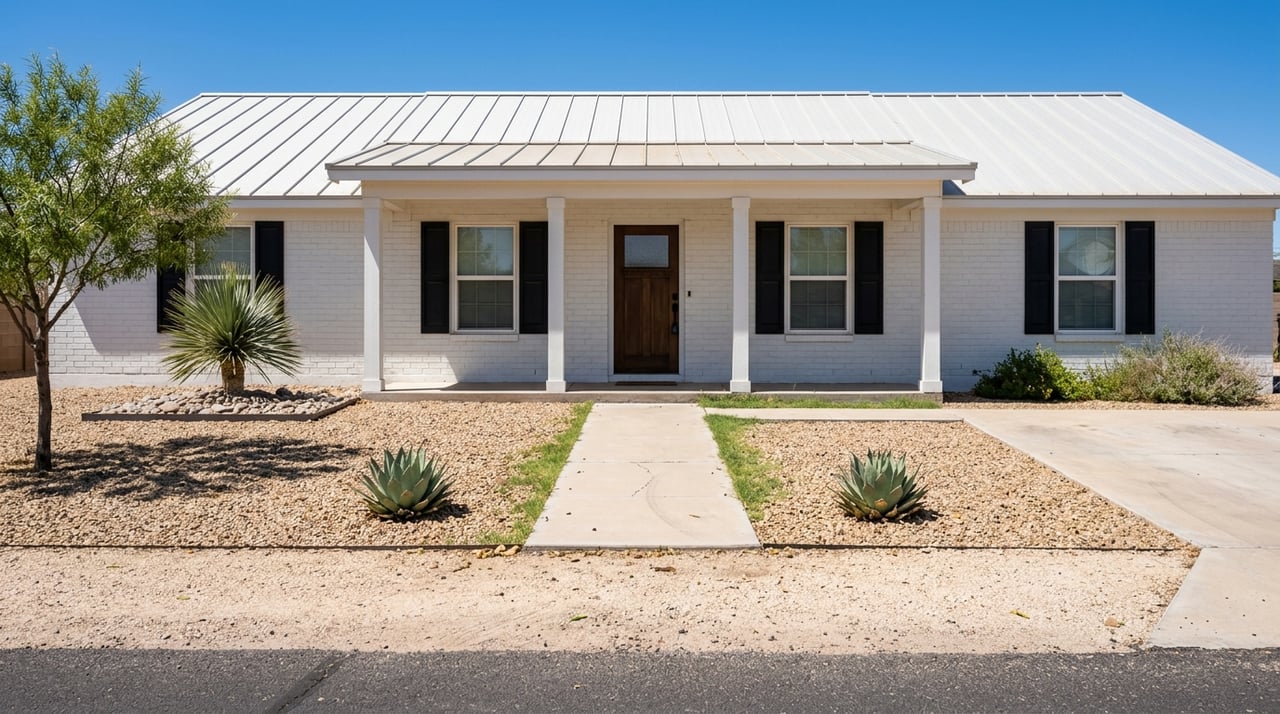
Living in Texico NM: Everyday Life Near Clovis
April 2, 2026
April 2, 2026
Looking for a quieter pace without giving up access to everyday essentials? Texico offers a small-town setting right on the New Mexico-Texas border, with Clovis close by when you need more shopping, services, or dining. If you are thinking about a move in Curry County, this guide will help you understand what life in Texico looks like, from housing and commute patterns to schools and daily routines. Let’s dive in.
Texico is a small city in Curry County on the New Mexico side of the state line. According to the City of Texico, the community was established in 1902 as a railroad and agricultural hub, and its name reflects its close connection to both Texas and New Mexico.
That border location still shapes daily life today. The city highlights its partnership with Farwell, Texas, and regional transportation planning continues to focus on the shared corridor at the state line. For many buyers, that means Texico offers a distinct small-town identity with practical regional access.
Texico is truly small in scale. ACS 2024 5-year estimates via Census Reporter place the population at 967 residents in about 0.8 square miles, while the 2020 census counted 956 residents.
That size can influence how a town feels day to day. In a place like Texico, routines tend to be simple, travel times are short, and community life often feels more personal and familiar. If you prefer less congestion and a more grounded pace, Texico may be worth a closer look.
Housing in Texico appears to lean toward ownership rather than a dense rental environment. Census Reporter shows 415 housing units and 372 households, while Data USA reports a 71% homeownership rate.
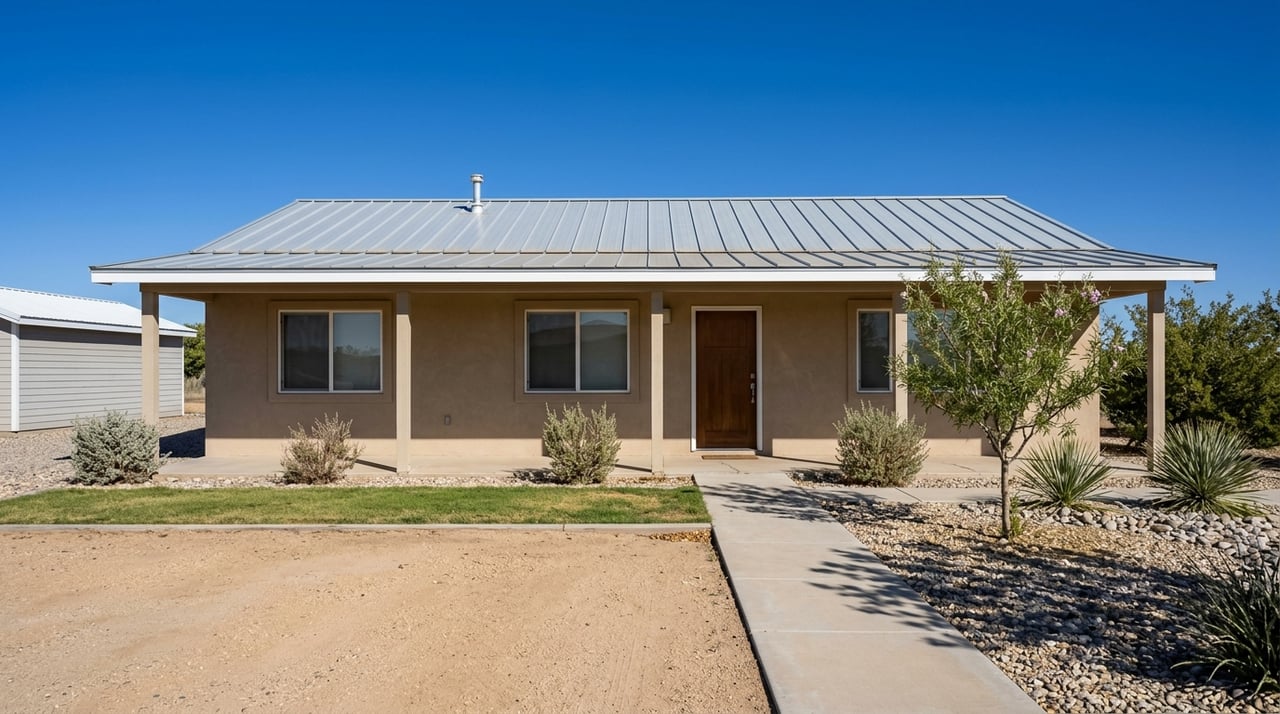
The median value of owner-occupied homes is $95,900. For buyers comparing communities in eastern New Mexico, that data suggests Texico may appeal to people looking for a modest entry point into homeownership or a property with a small-town setting.
Median household income is $65,000, and per-capita income is $26,126, according to Census Reporter. Taken together, those figures point to a local market that is practical, steady, and oriented around primary residences.
One of Texico’s biggest lifestyle advantages is how manageable daily travel can be. Data USA reports an average commute time of 15.5 minutes, with 87.9% of workers driving alone and households averaging about two cars.
That tells you a lot about how people move through the area. Texico is car-dependent, but the drives are generally short, which can make errands, school drop-offs, and work routines easier to manage.
For buyers coming from a larger metro, that shorter commute can feel like a major quality-of-life upgrade. Less time in traffic can mean more time at home, more flexibility in your day, and a less hectic weekly routine.
For many households, schools are a major part of how a community functions. Texico Municipal Schools includes Texico Elementary for PreK through 5th grade, Texico Middle for grades 6 through 8, and Texico High for grades 9 through 12.
Even if schools are not your main reason for moving, a local school district often serves as a community anchor. In small towns, school events, schedules, and activities can play a visible role in the rhythm of daily life.
Texico also maintains its own local government services. The city government site lists public works, police, fire, municipal court, and senior citizen services, with council meetings held on the second and fourth Tuesday at 6:30 p.m.
Texico offers a small, service-oriented local setting. Research points to a limited business base within Texico itself, including businesses such as Ashcraft Enterprises and Five Heart Farms through the Clovis/Curry County Chamber directory.
In practical terms, that means many residents likely rely on nearby Clovis for a broader range of errands and services. This is an important lifestyle point for buyers to consider. You can enjoy a quieter home base in Texico while still having access to more shopping and service options a short drive away.
According to the Clovis/Curry County Chamber, the area includes more than 1,100 local companies and nearly 50,000 residents. Its directory highlights options such as S&S Supermarket, Covenant Health Medical Group, and North Plains Mall, which helps illustrate the larger service network available nearby.
Texico’s economy reflects its rural setting and transportation connections. Data USA lists the largest resident industries as Transportation & Warehousing, Health Care & Social Assistance, and Agriculture, Forestry, Fishing & Hunting.
That mix fits what many people expect from a small border-area community in eastern New Mexico. It also helps explain the town’s practical feel. Texico is shaped by work, movement, and agriculture rather than a fast-growth urban pattern.
For buyers, that can matter because local economic character often influences housing demand, traffic patterns, and daily routines. In Texico, the data supports a lifestyle that is more straightforward and utility-driven than high-density or highly commercialized.
One of the best ways to think about Texico is as a small-town home base with access to a larger nearby city. Clovis, with a 2020 census population of 38,567, provides a very different scale from Texico.
That contrast is part of Texico’s appeal. You can enjoy the quieter environment of a town with fewer than 1,000 residents while staying connected to the retail, medical, and service options available in the Clovis area.
For some buyers, that balance is exactly the goal. You may not want the pace or density of a larger city, but you also do not want to feel isolated. Texico offers a middle ground that can work well for people who value space, simplicity, and regional convenience.
Texico can be a strong fit for several types of buyers, depending on your priorities. If you want a modest homeownership market, a short commute, and a close-knit small-town setting, the data points in that direction.
You might find Texico especially appealing if you are looking for:
It may also appeal to buyers who want to stay connected to both New Mexico and the Texas border region. The town’s identity has long been tied to that cross-border relationship, and that remains part of its practicality today.
Like any town, Texico works best when it matches your lifestyle. If you enjoy a slower pace and do not mind driving to Clovis for a wider range of shopping and services, Texico may check a lot of boxes.
If you prefer a place with a large retail core, more in-town amenities, or a wider variety of housing types, you may want to compare Texico carefully with other Curry County options. The right fit depends on how you want your day-to-day life to feel, not just what a listing looks like online.
That is where local guidance matters. When you are weighing location, commute, lot size, and nearby services, it helps to work with a real estate team that understands how these small-market tradeoffs play out in real life.
If you are exploring homes in Texico or comparing it with other Curry County communities, Tammy Waters can help you sort through your options with practical local insight and step-by-step support.
Explore additional posts offering valuable real estate guidance and local insight.
Partner with Tammy who's dedicated to providing clarity, care, and honesty throughout every step.

TAMMY WATERS
ADDRESS 400 PILE, SUITE 300 CLOVIS NM, 88101