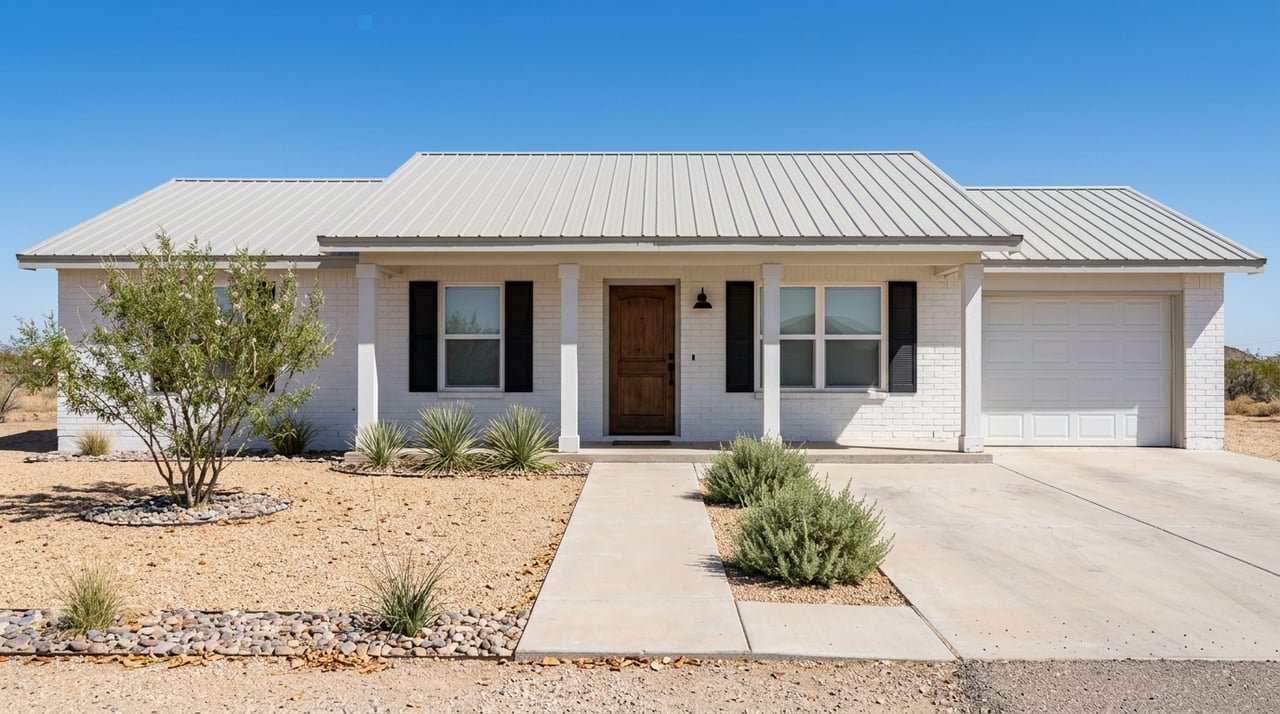
How To Buy A Home In Texico From Afar
May 14, 2026
May 14, 2026
Buying a home from another city is one thing. Buying a home in a small border town like Texico from afar takes a different level of planning. If you are trying to line up a move, protect your budget, and avoid surprises, you need a process that fits the way real estate works in Curry County. This guide will show you how to narrow your options, verify key property details, time your trip wisely, and move toward closing with more confidence. Let’s dive in.
Texico may be a small town, but remote buyers still need to look closely at local details that affect ownership, utilities, taxes, and commute patterns. That is especially true if you are relocating for work, moving from out of state, or trying to buy on a tight timeline.
A smart remote-buying plan in Texico usually has three parts. First, you use online tools and virtual showings to narrow your list. Next, you verify property records, utility setup, and any well or septic issues early. Then, if possible, you combine your final walkthrough, closing, and move-in setup into one carefully timed trip.
When you are buying from afar, your first goal is not to see everything. Your goal is to eliminate homes that do not fit before you spend time or money on travel. That means focusing on the property details that matter most to your daily life and monthly costs.
Ask for a clear short list based on your budget, preferred home style, lot size, and location. If you are comparing homes in and around Texico, it also helps to think about whether you want city utility service, a manufactured home, or a property with more rural features.
Texico has a close relationship with Farwell and sits east of Clovis, but you should not assume every drive will feel quick just because the towns are near each other on a map. Official location notes for Cannon Air Force Base place the base about eight miles west of Clovis, and Texico is on the route east of Clovis with about seven miles between Texico and Clovis.
If you are relocating for Cannon AFB or another job with fixed hours, map the full drive from the property to your destination. That gives you a better picture of your daily routine than relying on local shorthand about what is "close by."
Curry County says the county is divided into four school and tax districts: Clovis, Texico, Melrose, and Grady. When you review a property online, confirm which tax district it falls into instead of assuming the mailing area tells the full story.
This matters because tax district information can affect how you evaluate a property from afar. It is also useful context when you compare homes that look similar on paper but sit in different parts of the county.
Remote buyers need stronger due diligence because you cannot casually drive by a property, stop at local offices, or inspect details in person between contract milestones. In Texico and greater Curry County, public records can help, but they do not replace title work or property-specific investigation.
The Curry County Clerk records deeds, mortgages, agreements, plats, and other permanent public records. Its online lookup provides index information from 1986 to the present, which can be helpful when you are confirming basic recorded history before you travel.
The clerk also notes that it does not provide legal advice or in-depth title searches. Just as important, New Mexico is a non-disclosure state, so the sale price will not appear on the deed.
That means you should not expect deed records alone to tell the full story of a Texico property. For a remote purchase, county records, parcel research, and title-company work are all important parts of the picture.
The Curry County Assessor’s Office provides GIS maps, tax-rate documents, a property tax estimator, and a notice-of-value workflow. Those tools can help you confirm parcel details and better understand the tax side of ownership.
The assessor also explains that taxable value is 33.33% of appraised value minus applicable exemptions. In simple terms, that is why a property tax bill is not just market value multiplied by one flat number.
Utility details matter even more when you are buying from afar because they can affect your move-in budget right away. In Texico, the city posts utility rates that remote buyers can review ahead of closing.
According to the city’s posted rates effective July 1, 2026, buyers should be aware of a $250 joint utility deposit, a $500 residential water connection fee, and a $250 sewer connection fee per dwelling unit. The city also lists a $55 residential base water charge and a $23 residential sewer charge.
Texico also offers online bill pay and paperless billing. That can make move-in easier if you are trying to handle utility tasks before you arrive in town.
If the home you are buying is on city services, ask for the exact utility status early in the transaction. That gives you time to prepare for deposits, connection fees, and account setup instead of learning those numbers at the last minute.
If you are buying outside the typical city utility setup, well and septic questions should move to the top of your checklist. These items can take time to verify, and remote buyers have less room for delay.
For a private well, the New Mexico Environment Department says private wells are outside the department’s regulatory authority, which means the owner is responsible for testing and maintenance. The department recommends testing when purchasing a home with a private well and asking the seller or real estate professional for any prior water-testing history.
The state also references annual testing guidance for items such as total coliform bacteria, nitrates, total dissolved solids, and pH. If water quality has changed or the well system has been repaired, testing should happen right away.
For a remote buyer, that means well questions should begin as soon as you are serious about a property. Waiting until the end of the transaction can create stress and scheduling problems.
If the home uses septic, New Mexico says the transferor must have the system evaluated before transfer of ownership for an established on-site liquid waste system. The permit search and evaluation step can take up to 10 days.
If no permit is found, the system may need to be treated as unpermitted and could require registration or permitting after inspection. For Curry County properties, the Clovis field office is the local contact point for area questions. If the property has an advanced treatment system or holding tank, ownership-change paperwork and current maintenance or sampling contracts may also be required.
Manufactured homes are a common and practical option in this market, but they need careful review during a remote purchase. Curry County’s assessor page lists both a Manufactured Home Movement Ordinance and a Mobile Home Permanent Foundation Packet.
That is a strong signal to verify title status and foundation details early, especially if financing is involved. If you wait too long to confirm how the home is classified and whether the foundation paperwork is in order, your timeline can get tighter fast.
One of the biggest mistakes remote buyers make is treating the inspection and appraisal like the same thing. They are not.
Consumer guidance says you should schedule a home inspection as soon as possible after choosing a home. It also explains that an inspection is different from an appraisal, and that lenders generally require an appraisal.
If your contract is contingent on inspection, that may give you the chance to negotiate repairs or cancel based on the results. For a remote buyer, this is one of the most important protection points in the process.
Because these are separate steps, build both into your travel and decision timeline. That way you are not booking flights or arranging movers before the major property questions are answered.
A fully remote closing may be possible in New Mexico, but it depends on the details of your transaction. The New Mexico Secretary of State says approved remote online notarization is allowed, and the notarial officer must be physically located in New Mexico during the notarial act while verifying identity through approved communication technology.
In practice, that means remote signing can work in some situations, but only if the lender, title company, and document package support it. You should ask this question early instead of assuming every closing can be handled the same way.
Consumer guidance also says buyers should receive closing documents in advance, and the lender must send the Closing Disclosure at least three business days before closing. That review window matters even more when you are buying from another location.
Before closing, review the Loan Estimate and Closing Disclosure carefully, confirm any agreed repairs are complete, and make a plan for post-closing tasks like insurance, tax escrow setup, and change of address. If your closing is not fully remote, this planning can help you reserve your in-person time for the final walkthrough and signing only.
A smooth remote purchase does not end when the contract is signed. It ends when you can actually arrive, unlock the door, and begin living in the home with key services in place.
For military relocations, Cannon AFB’s housing office advises service members to contact the Military Housing Office as soon as they know they are moving. The office offers referral and relocation assistance for local community housing, which can be helpful if you are trying to compare options and time your move.
MilitaryINSTALLATIONS also notes that there is no base transportation. If you are moving to Texico and commuting elsewhere, plan your own vehicle, arrival schedule, and daily transportation from the start.
If you want to keep the process organized, focus on this order:
Buying a home in Texico from afar can absolutely work when the process is built around local facts instead of guesswork. With the right sequence, you can reduce surprises, protect your time, and make better decisions before you ever pack the car or book the flight. If you want local guidance, practical next steps, and a team that understands Curry County logistics, reach out to Tammy Waters.
Explore additional posts offering valuable real estate guidance and local insight.
Partner with Tammy who's dedicated to providing clarity, care, and honesty throughout every step.

TAMMY WATERS
ADDRESS 400 PILE, SUITE 300 CLOVIS NM, 88101